Plan a Winter Weekend Around the Usable Daylight
Short daylight changes where an outdoor activity belongs in the day. Check the location and date, move the most light-dependent part earlier and give the return journey enough room before darkness and changing conditions.
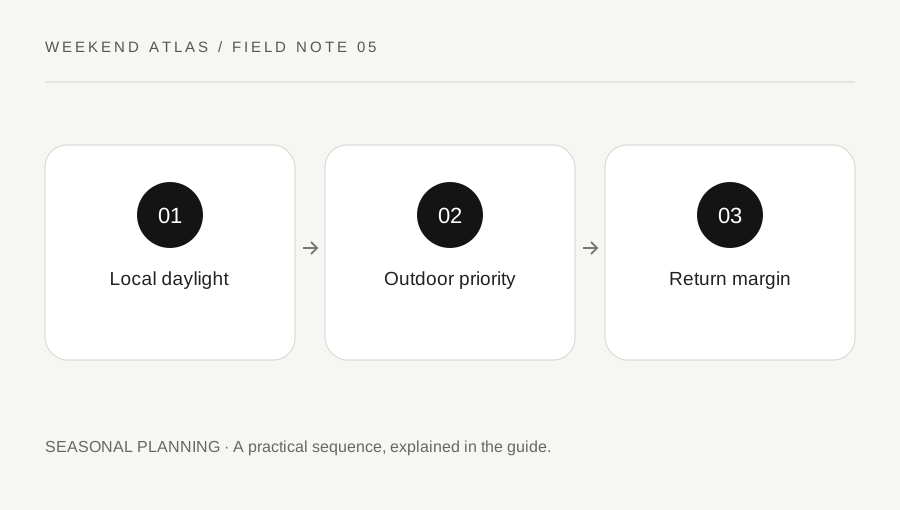
Original explanatory diagram. Examples illustrate a method or decision; they are not claims of personal testing.
Check local times rather than a seasonal assumption
Look up sunrise and sunset for the actual destination and dates through a reliable local source. Latitude and date matter; a winter afternoon in one region does not resemble another. Twilight, cloud, terrain and tree cover also affect visibility. Do not treat the published sunset minute as a universal deadline for beginning the return.
Check the time zone and any clock change relevant to the trip. Write the useful information beside the day plan rather than keeping it in a separate weather tab. The Met Office describes the shorter days and unsettled conditions of UK winter, but a general seasonal summary is not a forecast or a destination-specific daylight calculation.
Move the light-dependent activity earlier
Identify what genuinely needs daylight: a countryside path, an outdoor sculpture route or finding an unfamiliar trail entrance. Place that activity before flexible indoor time. Avoid spending the brightest hours travelling unnecessarily and then rushing the outdoor priority near dusk. A museum or café can sometimes fit after the outdoor part if its current hours allow.
For an illustrative city-edge walk, arrange arrival, a simple meal and the route so that the walk starts with a clear return margin. Do not fill the morning with several optional stops simply because they are nearby. The day plan should reflect the constraint that matters, rather than treating all activities as interchangeable blocks.
Assess conditions and route demands separately
Check the forecast, warnings and current route information. Cold, ice, flooding, wind and poor visibility can affect whether the activity is appropriate, regardless of the daylight window. Choose a route within the group’s ability and equipment, and follow local land-manager or operator guidance. A short distance is not automatically a simple winter outing.
Inspect the return surface and transport arrangements. A route that feels easy in dry daylight may be unsuitable in slippery conditions or darkness. If conditions exceed the plan, choose a shorter supported alternative or an indoor activity. Do not use a fixed itinerary as a reason to continue when current information points to a different decision.
Set a practical turn-back point
Choose a time or location where you will reassess and return if necessary. Include rests, navigation uncertainty and the slowest reasonable pace in the group. Avoid calculating the return solely from an app moving-time estimate. The plan should make it possible to stop without feeling that the whole weekend has failed.
In an illustrative two-hour outing, a delayed start may mean using a shorter loop rather than walking the original distance faster. Tell the group that decision in advance. Carry suitable equipment for the chosen activity and follow relevant safety guidance; a phone light should not be assumed to replace appropriate preparation for an outdoor route.
Give the darker hours an independent purpose
Choose evening activities with confirmed opening hours and a manageable route back to the accommodation. This can be a meal, performance or quiet indoor time rather than another outdoor transfer. Check seasonal closures before relying on a favourite summer stop. A shorter daylight day does not need to become a longer list of rushed bookings.
Before leaving the accommodation, recheck the current weather and daylight plan, then keep the return details accessible. After the trip, note whether the day felt rushed and which activity deserved more daylight. Use that observation to improve the next plan while checking fresh local information. Winter planning works best when the day shape follows the conditions you actually have.
A practical checklist
Choices are saved in this browser. Reset them here or clear this site’s browser storage.
Questions that come up
Can I use the sunset time as my return deadline?
Leave an appropriate margin for terrain, cloud, visibility and the route. The exact sunset minute is not a universal safe endpoint.
Does a short walk need winter planning?
Distance is only one factor. Surface, weather, access and the return route can change the task.
Should I rush if the start is delayed?
Reassess the scope and conditions. A shorter suitable activity can be a better choice than trying to recover every minute.
References & scope
Background references checked on 18 October 2026. Worked examples and diagrams are original teaching material.