Check a Weekend Rail Connection and the Last Practical Return
A rail weekend needs a usable return plan as well as an attractive outbound service. Check the actual travel date, interchange and last-mile connections, then choose a route with understandable alternatives if the timetable changes.
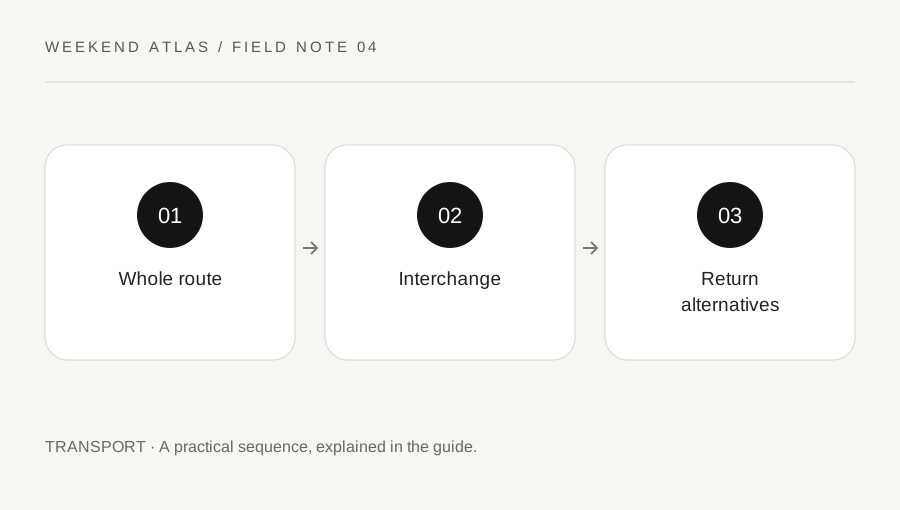
Original explanatory diagram. Examples illustrate a method or decision; they are not claims of personal testing.
Search the whole journey on the actual date
Use the relevant operator or official journey planner for the intended weekend. Enter the precise origin and destination rather than only the main city stations. Check planned engineering work and replacement services. A weekday journey time or an old timetable screenshot is not evidence that the same service runs on Sunday.
Read the itinerary details rather than only the headline duration. It may involve a station change, a bus section or a short interchange that changes the practicality of the trip. National Rail separates planned disruption from live running information, which illustrates why both checks matter. Use the equivalent official sources for the network you are travelling on.
Evaluate the interchange as a physical transfer
Identify the arrival and departure stations, any change of building and the route between platforms where information is available. Include luggage, access requirements and unfamiliarity. A planner minimum interchange is not a promise that every traveller will find the transfer comfortable. If assistance is needed, check the operator arrangements in advance.
For an illustrative connection, a twelve-minute same-station transfer is a different task from crossing a city to another terminal. Do not apply a universal buffer to both. Look at the consequence of missing the onward service and whether later options exist. A slightly longer itinerary with a clear transfer may be more suitable for a short leisure trip.
Understand ticket and connection conditions
Read the ticket restrictions, reservation requirements and operator guidance for the booked route. Separate services purchased independently may have different consequences from a supported through journey. Do not assume that every missed train creates the same right to another service or accommodation. Use current terms and appropriate advice for a disputed case.
Amtrak, for example, describes specific customer-service commitments and guaranteed-connection situations with conditions. That does not establish a universal rule for unrelated trains, local buses or airlines. Keep the relevant booking confirmation and official support route. Knowing which provider controls the connection helps you seek the correct assistance if disruption occurs.
Choose the last practical return deliberately
Find the final service and also the earlier one that gives the trip a manageable margin. Include the journey from your last activity to the station and the trip from the home station to your door. The last train may connect with no final bus. Avoid making an optional extra activity depend on catching the only remaining route.
An illustrative Sunday plan might leave the final attraction early enough for an earlier train, keeping a later service as a possible backup only if the ticket allows it. Check current restrictions before relying on that option. If there is no realistic later route, acknowledge the consequence when choosing the activity end time.
Recheck and respond using current information
Review planned work before departure and live information on the travel day. Set supported journey alerts if useful, but do not treat an alert subscription as a guarantee that you will receive every update. Check station displays and official staff guidance when conditions change. Keep enough battery and an offline booking reference.
If a connection is threatened, contact the relevant provider through its official route and ask about supported alternatives. Preserve necessary evidence without posting private ticket codes publicly. After the trip, note which transfer needed more time, but recheck schedules for every future journey. A good rail plan makes uncertainty manageable rather than pretending a timetable is a guarantee of arrival.
A practical checklist
Choices are saved in this browser. Reset them here or clear this site’s browser storage.
Questions that come up
Is the last train always a useful backup?
Only if it runs, your ticket permits the route and you can reach it. Check the entire journey home.
Will every missed connection be covered?
No universal rule applies. Read the specific operator and ticket conditions, especially for separately booked services.
Are journey alerts enough?
They are useful support, but also check current official information and station guidance.
References & scope
Background references checked on 18 October 2026. Worked examples and diagrams are original teaching material.