Plan a Museum Visit Around Entry Rules and a Few Real Priorities
A museum visit is easier to enjoy when the entry arrangement and a small set of interests are clear. Check the official venue information, choose a realistic route and leave room to pause rather than trying to cover every gallery.
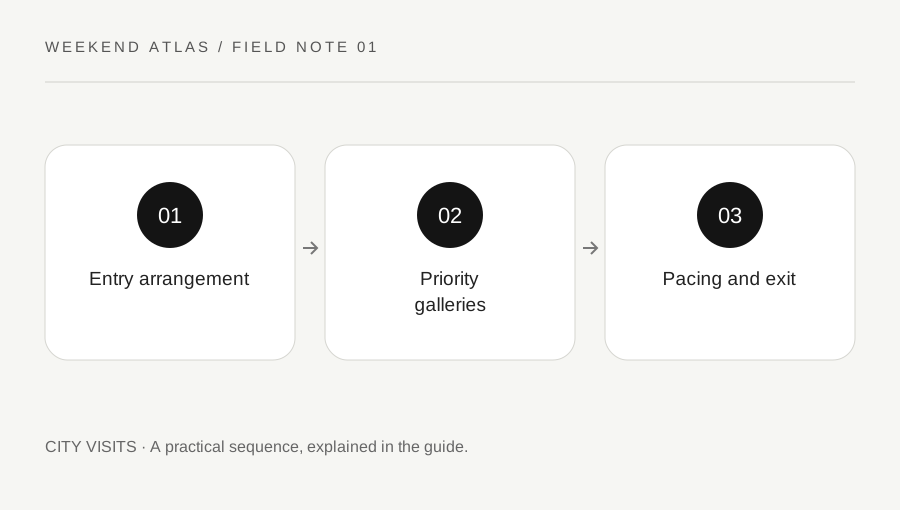
Original explanatory diagram. Examples illustrate a method or decision; they are not claims of personal testing.
Start with the exact building and date
Confirm the museum location, opening hours and any date-specific closure on the official website. Large institutions can have several buildings with different entry arrangements. Check whether general admission, a timed pass and a special exhibition ticket are separate things. Free admission does not necessarily mean every part of the visit needs no reservation.
For an illustrative city weekend, a Saturday afternoon pass to one building should not be treated as permission for an unrelated branch or a separate exhibition. Save the confirmation and read its conditions. Do not infer late-arrival or re-entry rules from another museum. The exact venue current guidance is the relevant source.
Choose a few objects or themes
Pick two or three priorities before looking at the entire floor plan. They might be a particular collection, an exhibition and one architectural space. Check whether the relevant gallery is open and whether an object is currently on display. Collections pages and visitor pages serve different purposes; owning an object does not mean it is visible today.
Use a map to connect the priorities with the entrance, toilets and a rest point. Avoid arranging a route that repeatedly crosses the whole building. If the museum is unfamiliar, allow time to orient yourself after entry. A small focused route can leave room for an unexpected discovery without turning the day into an exercise in completion.
Account for security and carried items
Read the venue bag, photography and prohibited-item guidance before leaving your accommodation. Do not assume a luggage locker exists or that a large weekend bag will be admitted. Plan where belongings will stay through an appropriate arrangement. Check whether food and drinks are permitted in specific areas rather than relying on a general museum habit.
Include entry checks in the arrival plan without inventing a guaranteed queue duration. If you have a later fixed booking, avoid placing it immediately after the museum exit time. A timed pass controls one part of the process; it does not eliminate walking, security or finding the right gallery.
Plan access and pauses specifically
Use the venue accessibility page and contact visitor services with unresolved questions. Ask about the actual route, seating, lifts, sensory information, captions or other facilities relevant to you. Smithsonian guidance, for example, directs visitors to individual museums for their access options. A broad accessibility statement is a starting point rather than a full description of every room.
Build a pause into the route and identify a simple way to shorten it. In an illustrative two-hour visit, you might see one priority gallery, rest and then decide whether to continue. Do not assume that everyone wants or can manage the same walking distance. A good plan supports the visitor rather than testing their ability to follow the itinerary.
Keep the ending flexible and clear
Know the closing time and any earlier last-entry rule for a particular area. Leave enough time to collect stored belongings and reach the exit. If there is a shop or café you want to use, check its hours separately rather than assuming they match every gallery. Avoid leaving essential arrangements until staff are closing the building.
After the visit, note what you would return for instead of treating missed galleries as failure. Keep the official map or collection link if it helps a future visit, but recheck opening information next time. The purpose of a museum plan is to create a manageable experience with the objects you care about, not to guarantee that one afternoon can contain the whole institution.
A practical checklist
Choices are saved in this browser. Reset them here or clear this site’s browser storage.
Questions that come up
Does free entry mean no pass is needed?
Not necessarily. Check the exact venue and date; timed passes or separate exhibition tickets may still apply.
Can I bring my weekend luggage?
Read the museum bag rules and storage information. Do not assume large bags or lockers are supported.
Should I plan every gallery?
Choose priorities and a realistic route. Leave room for rest and unplanned discoveries.
References & scope
Background references checked on 18 October 2026. Worked examples and diagrams are original teaching material.