Plan an Adult Group Weekend Without Requiring Everyone to Do Everything
A group trip needs a few shared decisions and room for different preferences. Agree on the fixed commitments, optional time and booking authority before collecting money or building a schedule that nobody has actually accepted.
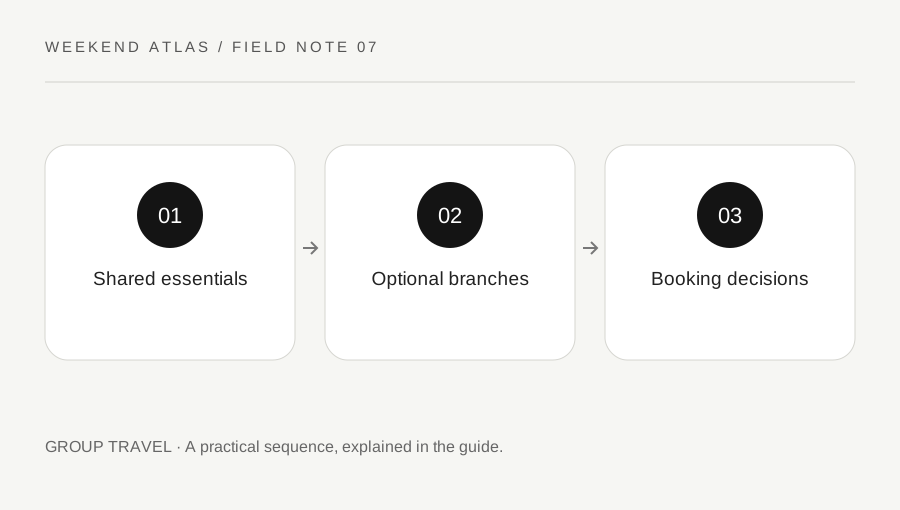
Original explanatory diagram. Examples illustrate a method or decision; they are not claims of personal testing.
Collect constraints before suggestions multiply
Ask each traveller for the dates they can attend, essential access or dietary requirements and the level of spending they are comfortable discussing. Keep sensitive details private where appropriate. Separate a firm constraint from a preference such as an early breakfast or a particular museum. Do not assume the loudest suggestion represents the whole group.
Use a small shared summary rather than a long chat poll for every detail. For an illustrative group of six, the agreed dates and a practical accommodation area may matter more than choosing the final restaurant immediately. Establish the few decisions that make the trip possible before debating decorative extras.
Choose a limited shared core
Agree on one or two activities people genuinely want to do together, such as a meal and a main outing. Identify the arrival and departure periods that need coordination. Leave other blocks optional. A group weekend does not require identical interests or a continuous group route from breakfast to bedtime.
Make the shared core realistic for the people attending. Check travel time, access and the pace of the activity. If a long walking tour excludes someone who wants to join the main gathering, consider another shared choice rather than calling the exclusion an unavoidable preference. Optional branches work best when the essential group experience remains usable.
Define booking authority and commitments
Before one person pays, confirm what is being booked, who is included, the total amount and the relevant cancellation or change conditions. Record the decision through an agreed channel. Do not treat silence in a busy chat as permission to commit someone to a non-refundable booking. Use the provider official payment route.
Check group-specific rules for activities and venues. The British Museum, for example, publishes separate group-visit arrangements; other places have their own thresholds and processes. Do not assume several individual tickets always substitute for an appropriate group booking. Avoid quoting old prices or policies in the shared plan when the live provider page can be checked directly.
Make optional branches easy to rejoin
Give each optional block a clear meeting point and time for the next shared commitment. Share the exact location rather than a vague phrase such as meet in the centre. Let people choose a slower or different activity without making them responsible for redesigning everyone’s day. Check that the rejoining route is practical.
For an illustrative afternoon, some travellers may visit a gallery while others rest or explore nearby shops, then meet for an agreed meal. Keep the meal booking and contact details accessible. If plans change, use one communication channel and confirm consequential updates. Do not rely on every person continuously monitoring several chats.
Keep shared costs and the ending clear
Agree how shared expenses will be recorded and settled in a way everyone understands. Separate individual extras from agreed shared costs. This is practical coordination rather than a universal rule about equal splitting. A person choosing a different optional activity should not discover an unexpected charge afterwards.
Before departure, check the final shared arrangements, transport and any property responsibilities. Close outstanding cost questions using the agreed method and avoid sharing personal financial information unnecessarily. After the trip, ask which shared moments worked and where more independent time would help. A successful group weekend gives people a clear core experience while respecting different needs and choices.
A practical checklist
Choices are saved in this browser. Reset them here or clear this site’s browser storage.
Questions that come up
Should every activity include the whole group?
No. Agree the shared essentials and make optional time easy to navigate and rejoin.
Is no reply enough to book for someone?
Obtain a clear commitment before spending on their behalf, especially when terms restrict changes or refunds.
Can we ignore group booking rules if we buy separately?
Check the venue current policy. Group arrangements can depend on the visit format and party size.
References & scope
Background references checked on 18 October 2026. Worked examples and diagrams are original teaching material.